Tuesday:
Introduction of New Concepts:
Tuesday's class discussion opened with an introduction to a new marketing concept known as the "Total Product Concept". The total product concept is a circular diagram that identifies the different components of a product. At the center of the diagram is the core product. The core product is the part of the product that addresses a consumer need. Because we cannot see or touch needs, this aspect of the product is often intangible. Let us use a water bottle as an example. A water bottle's core product is the need consumers have for water in order to survive. The next ring of the diagram refers to the tangible aspect of the product. the tangible aspect of the product is the part that you can see, feel, and touch. To continue with the example of a water bottle, the tangible product is the plastic bottle and the water. It is important to note that the engineers we are working with on our SMART project often focus on the tangible aspect of the product-it is our job to help them realize all three components of a product. Lastly, the outermost section of the total product concept diagram is the augmented product. The augmented product is anything related to the experience a customer gets when using the product. To finish up with the water bottle example, the augmented product would be the guarantee that each water bottle contains the best quality water possible.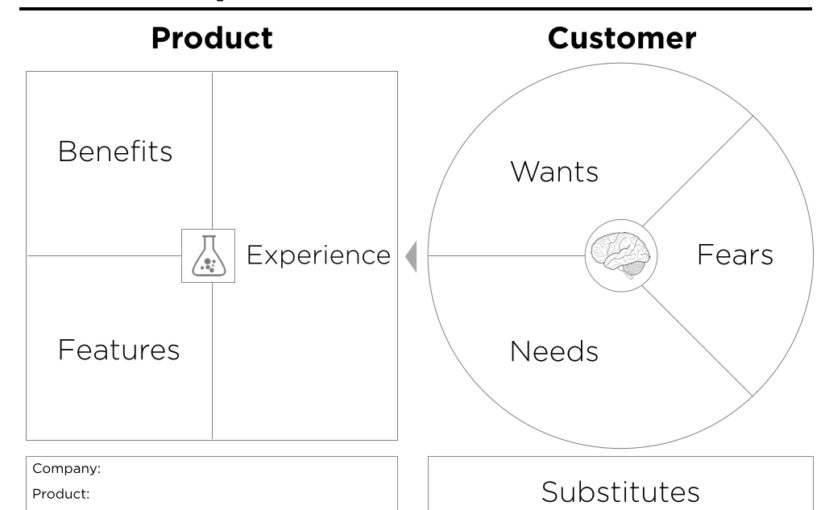 After discussing the total product concept, we moved into a discussion about another marketing concept known as the "Value Proposition Canvas". The value proposition canvas shows the relationship between the product, customer, and substitutes. The business creating the product must consider the benefits, features, and experiences their product offers. In terms of the customer, they have to think about their needs, wants, and fears. It is difficult, but important, to distinguish between wants and needs. needs tend to be the rational drivers of a decision, whereas wants are the emotional drivers. Finally, the business must consider the substitutes to their product. Ultimately, the business will close the gap between themselves and the customer, while simultaneously widening the gap between the customer and substitutes, by creating value!
 The final concept that was introduced on Tuesday's class is "Positioning Bases". A positioning base is a psychological concept of how the customer views you product in relation to the competition. Products can be positioned based on attributes, the price/quality relationship, use or application, product user, product class, competition, or emotion. One example we talked extensively about in class is the product line Arm & Hammer offers. While they are known for their baking soda, they have positioned themselves on the basis of use and application. Their baking soda can be used for a variety of different things such as cooking, keeping your refrigerator fresh, and even whitening your teeth.
 New Shark Tank Episode: Gato Cafe
 After learning these new marketing concepts, we watched a Shark Tank clip about a business idea named Gato Cafe. Gato Cafe is the name of a cafe that would be located in southern Florida and would serve beverages and prepackaged foods to guests while they play with cats that roam the cafe. This episode is unlike any episode we have watched this semester because the "product" is a business idea, not a tangible product. Additionally, Gato Cafe is different because it is a service product.
  After watching the video, we broke into small groups and discussed how the Gato Cafe aligned with the value proposition canvas. After small group discussions, we came together as a class and worked through the value proposition canvas for Gato Cafe. In discussing customer needs, the class identified Gato Cafe a potential alternative health care provider. Gato Cafe can be part of the growing trend of animal therapy. Therapy dogs have become popular, but not everyone likes dogs. So, Gato Cafe could differentiate itself as a cafe that uses "therapy cats".
 We also returned to the value pyramid this week and were asked to answer the question: How does Gato Cafe create value? Gato Cafe creates value on a functional basis by appealing to the senses and offering variety. The cafe also creates value on an emotional basis in that its service has the potential to reduce anxiety, act as therapy, and offer fun and entertainment.
Thursday:
Continuation of Gato Cafe:
At the beginning of Thursday's class we continued our discussion of Gato Cafe. After briefly reviewing market research that appeared to reveal there is no interest in cats in Southern Florida, we broke into small groups to answer a variety of questions related to concepts from Chapter 10 of the textbook. One of the questions we spent a considerable amount of time discussing is: what type of product is Gato Cafe? Every group said that Gato Cafe was an unsought product because there was little market interest in the concept (at least initially). We, however, were misunderstanding the definition of an unsought product. An unsought product is a product that people want to avoid, like life insurance. That said, Gato Cafe is better defined as a specialty product that distinguishes itself on its attributes.
Another concept we discussed at length is co-branding. Co-branding is the act of putting two or more brands on one product in an effort to promote both brands. We were asked to come up with two co-branding opportunities for Gato Cafe. My group thought of bringing a vendor to Gato Cafe. Panera, which has already established brand equity, would be a great vendor for Gato Cafe because they sell cafe style food in prepackaged forms as well as fresh in store. Another co-branding opportunity my group thought of was for Gato Cafe to partner with a local animal shelter and bring those cats to the cafe for adoption. This would hopefully spark community interest in a cat cafe.


No comments:
Post a Comment