Thursday, March 30, 2017

Reflection: Week 10

Tuesday: 

New Shark Tank Episode Introduced: Fresh Patch

Introduction: What is it? 
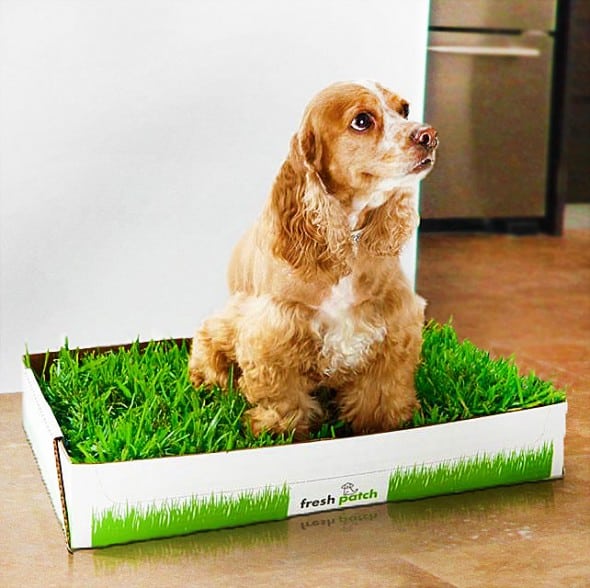
Image result for Fresh Patch
Chloe, Andrew's dog, shows how Fresh Patch is meant to be used.
Tuesday we watched a new episode of ABC's Shark Tank, which introduced a product named "Fresh Patch". Fresh Patch is a square of fresh, real grass your pet can use to go to the bathroom if they are unable to be let outside. Andrew Feld, creator of Fresh Patch, invented this product so that his dog could go to the bathroom on the porch of his condo, where there was no lawn space. Furthermore, Andrew knew that his dog, Chloe, would be willing to use the Fresh Patch because she did not have to be trained how to go to the bathroom on natural grass.

Analysis: 

After viewing the video, we conducted a thorough analysis of the product. Here are some of the most important inferences we were able to make:

Target Market: We believe that the target consumer for Fresh Patch is an urban dweller than owns and feels an emotional connection to their pet and earns a high income, but leads a busy lifestyle and is unable to give their pet the attention it deserves. We were able to conclude this because of things like the price of the product and identifying what parts of the country has living space without a lawn.

Image result for fresh patch shark tank
Andrew owns a patent for this patch of grass.
Product and Pricing Strategy: We concluded that Fresh Patch is a specialty product. It is designed to fill the emotional guilt pet owners feel when they are unable or unwilling to take their dog for a walk to use the bathroom. For those same reasons, Fresh Patch is positioned by emotion. As Barbara from Shark Tank worded it, this is a "feel good" product for pet owners. Consumers will not buy the product because of its function. Rather, consumers will buy the product because it makes them feel like they are giving their pet a better life.

Because Fresh Patch is a specialty product, it will most likely be price inelastic. There is nothing like it on the market than can silence the guilt pet owners feel. Therefore, we concluded that Fresh Patch should pursue a profit-oriented sales objective, meaning it will charge a higher price and make a significant margin per customer. To achieve this objective, Fresh Patch will need to implement a price skimming strategy.

Shark Mark Cuban wanted to team up with Andrew and Barbara. He believed he could accelerate the growth of Fresh Patch: What does this mean? 

In making a joint offer with Barbara, Mark Cuban said that he would take over the back office stuff such as the accounting and website maintenance for Fresh Patch so that the product could grow quicker. Mark is referring to the product cycle and adoption curve, concepts we learned before spring break. In order for Fresh Patch to really catch on, it needs to pass the chasm of the adoption curve and move into the early majority.  
At the time of the Shark Tank episode, Fresh Patch had only been adopted by the "innovators" who are our pet lovers!

Thursday: 

Continuation of Fresh Patch: 

In class Thursday, we looked at Fresh Patch's income statement again. This time, however, we broke the income statement into trial users and subscribers. We learned from the video on Tuesday that only 25% of Fresh Patch's customers are subscribers. Initially, this number seems very low. However, when you analyze the revenue generated by subscribers versus trial users, you will find that subscribers make up a significant amount of Fresh Patch's income.

While the numbers we calculated to reach this conclusion make several assumptions about the company and what define a trail user, it is still effective in making the point that Fresh Patch should concentrate its efforts in getting their customers to be subscribers. This conclusion relates to a marketing concept known as Buyer Contribution. Buyer contribution is the answer to the question of how much of a particular user group contributes to your company's sales and income.

How can Fresh Patch improve its marketing strategy? 

It is obvious that Fresh Patch has only skimmed the surface when it comes to profits in their industry, which begs the question: how can they be more profitable? To start, Fresh Patch can focus its efforts in marketing to an gaining subscribers. They should conduct an analysis of why trial users chose not to use the patch again. Some of it could be within Fresh Patch's control such as price or product inefficiency. Some if it, however, might be that the customer's dog just wouldn't use it. Once Fresh Patch finds out why their trial users don't come back, they can begin to discuss ways they can keep those users.

Additionally, Fresh Patch should conduct a geographic analysis of their customers. One reason it might be beneficial to do this is because they might not need to waste resources building an east coast distribution center if a majority of their sales are to the west coast. Conducting a geographic analysis will also help Fresh Patch know where to heavily market their product.

Related image
Currently, Fresh Patch owns a very small portion of their market share. Improving their marketing strategy and conducting market research will help them take over them market!
Image result for dogs wearing shoes
Example of dog accessories


In class, we looked at basic geographic data that was generated by the Simmons Database. Here are some of the conclusions we were able to reach:
1. 55 million people in America own 1 dog
2. 3 million people who make over $100,000 per year own a dog.
3. 3 million people who work more than 51 hours per week own a dog.
4. 5 million people give their dog three treats per day, on average.
5. 14 million people bought apparel or fashion accessories for their dog in the last year.
6. There exist 2,200,000 people who work more than 40 hours per week, make more than $75,000 annually, and live in a condo or apartment.

What does this tell us? Fresh Patch's market size is HUGE! And, most importantly, our assumptions about Fresh Patch's target market were correct.

Thursday, March 23, 2017

Reflection: Week 9

Spring Break (March 13-17): 

Image result for GreenBoxThere was no blog post for last week because it was Spring Break! Even thought we had a break, I capitalized on the opportunity to start my Shark Plan project. As mentioned in my previous blog, I am studying a product named "GreenBox". GreenBox is a pizza box that is made entirely out of recycled material. Not only is it environmental friendly, it is convenient in that the top of the box transforms into 4 plates and the bottom of the box folds into a storage container for left overs. Thus far, I have focused on researching the business mission of the firm and conducting a situation analysis in which I identify internal strengths and weaknesses as well as external opportunities and threats. I will continue to work on sections of the plan as we progress through the remaining weeks of the semester.

Tuesday: 

SMART Project: Customer Discovery Survey

Instead of a traditional class meeting, Dr. Spotts gave our SMART Project groups the opportunity to sit down with him for a 15 minute meeting to discuss our customer discovery survey. Dr. Spotts gave our team valuable feedback and helped us refine our survey. Now that the final survey is approved, our team has begun interviewing people within our target market using the questions on the survey. 

Image result for autozoneIn addition to helping us with the customer discovery survey, Dr. Spotts encouraged us to conduct expert interviews in which we visit local auto stores and talk with the manager about the steering wheel covers they offer, if any. I am responsible for talking with AutoZone and Advance Auto Parts. When conducting these expert interviews, we are also going to try to get feedback on our heated steering wheel cover. Our team plans to have this work completed by next Thursday so that we are able to start to analyze the data during class.


Thursday: 

Today in class, we sat with our SMART project group members plus the members from one other group. My team sat with the team members of "OK To Drive". In these groups, we picked questions out of a hat and discussed them at length as they relate to our SMART project. The intent of this exercise is for us to learn concepts related to pricing- a main aspect of marketing.

Here are some of the questions/ topics I found interesting:

Q: Is there a way to incorporate price bundling into your SMART product pricing?

A: Yes, we feel that the ThermoWheel can be priced in such a way that would bundle the price of the product and the price of installation. We think this strategy will be most beneficial if we decide to sell the product in an auto parts store.
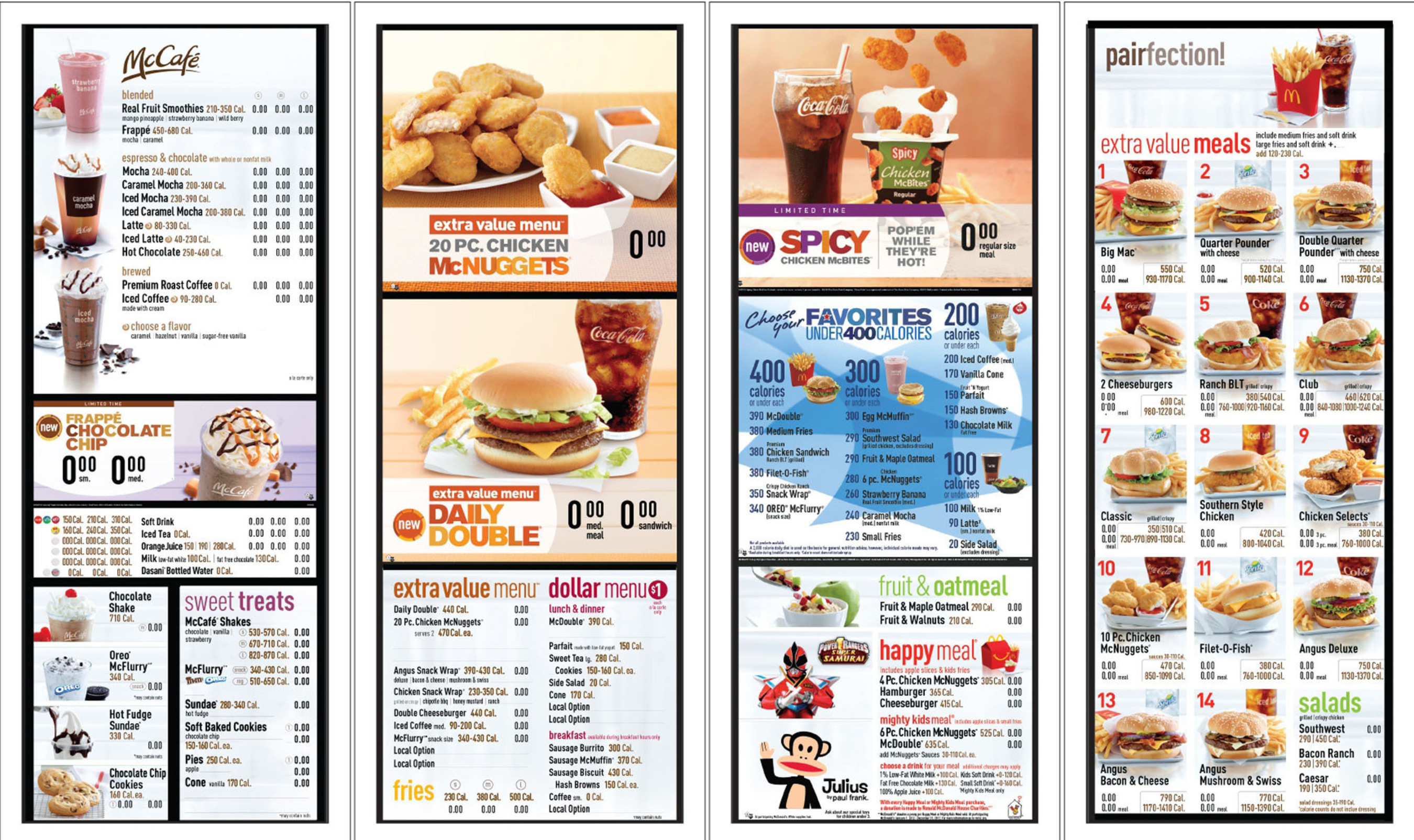
Image result for McDonalds Menu
Bundle Pricing is often used by fast food restaurants. Rather than asking consumers to pay for a burger, fries, and a drink separately, the restaurant will give them the option to pay one price for all three items.

Q: How price sensitive do you think your target consumer will be? Why?
A: We predict that our target consumer will be relatively price sensitive because a heated steering wheel is an accessory for your car, not a necessity. For that reason alone, I think we would attract less customers if the price was high. Another reason the ThermoWheel might be price elastic is because it is a new-to-market product and consumers might not be willing to try it if they perceive it to be overpriced.
Related image
In economics, the term price sensitivity is known as price elasticity. A product is said to be price elastic if the demand for it decreases when the price for it increases!

Q: Should your SMART team pursue a profit, sales, or status quo pricing objective?


A: We feel that our team should pursue a sales-oriented pricing objective because there is no established competitor in this market and the best way to gain market share would be to sell as many units of product as possible. We feel this is the best objective because generally speaking, larger market share also signals higher profits.

IMPORTANT: ThermoWheel as a volume business?

Based on our pricing objective, it is safe to assume that ThermoWheel will generate a volume business. From a Shark Tank episode a few weeks ago, we know that a volume business is when there are a lot of sales at a relatively low price. Each individual sale does not bring in a significant amount of profit. However, your product's target consumer base is so broad that you are able to make money through sales numbers. 

What is the difference between strategy and objective? 


A small point of discussion in class today was the difference between a pricing strategy and a pricing objective. One of my classmates explained this concept nicely. She said that a strategy is how you go about achieving your objective and that an objective should be thought of as an end goal. I think this concept is important to understand.

Thursday, March 9, 2017

Reflection: Week 8

This week's post will be short compared to my previous ones because the material we worked on in class this week was very concentrated and specific. This week is all about combining what we know about market research with the SMART project!

Tuesday: 

Tuesday's class was unique in that we worked with Dr. Spotts and our SMART groups one-on-one. In our meeting with Dr. Spotts, we presented our value proposition canvas that we completed with the engineers about our heated steering wheel cover. Dr. Spotts pointed out areas for improvement and suggest that we meet with our engineer partners to go over the map one last time. Additionally, we talked with Dr. Spotts about the 10 question survey we will be using to conduct market research. He was able to help us restructure and reword our questions. After talking with Dr. Spotts, we sent our materials to our marketing consultant, Sam, for review. Due to the busy nature of the week before spring break, we were unable to find a meeting time. However, our SMART project group is planning on meeting with her when we return from break.

At the end of Tuesday's class we were tasked with creating a "mega-mind map" that should encompass what we have learned throughout the first half of the semester. Completing the map was both a challenging and rewarding experience. We have learned so much throughout the course of the past eight weeks, which is why creating the map was challenging. It was, however, rewarding to step back and look at all we have accomplished thus far. A picture of my "mega-mind map" can be found below:

Thursday: 

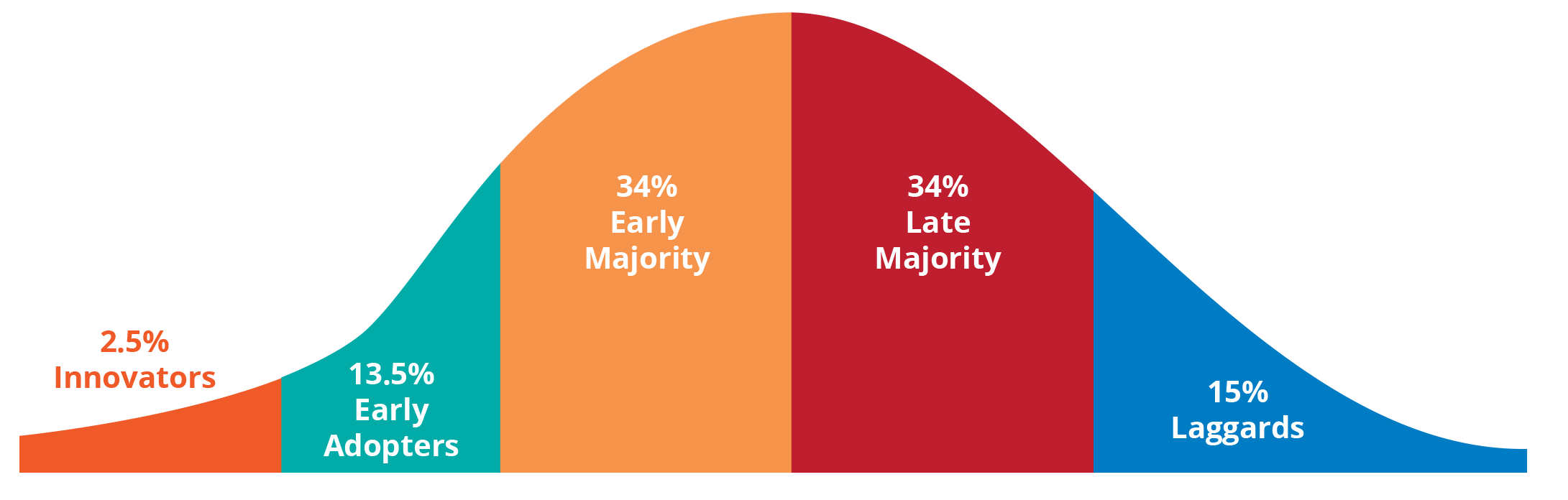
Image result for diffusion of innovationIn Thursday's class, we learned two major marketing concepts. The first marketing concept we discussed is the Diffusion of Innovation theory. This theory is a curve that shows how a product moves through a market. It shows that the first people to use a new product fall into a class known as innovators. Next, the product will work its way to early adapters who buy the product for purposes of social validation. A product cannot be successful unless it can pass the chasm that lies between the early adapters and the early majority. The early majority is most likely a huge portion of your target market and is where your product will thrive. Eventually, your product will reach the late majority and the laggards, which are those that will not purchase the product unless it is inconvenient not to.


In thinking about our SMART project, my teammates and I defined who we think our innovators, early adapters, and early majority will be:
Innovators: Those who are obsessed with "tricking out" their car. These people are the ones who strive to customize their car to their personal needs and wants.
Early adapters: Young adults who want to show off the product, but also find that they have a need for it. We predict that these people drive their cars a couple times per week to a part time job or social outings.
Early majority: the working class. Ideally, we want our heated steering wheel to reach the working class and become a necessity for people who drive in cold weather very often.

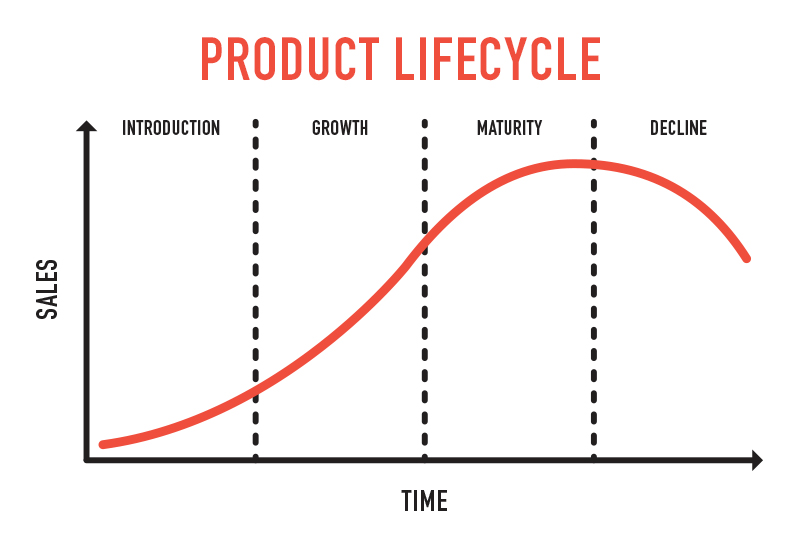
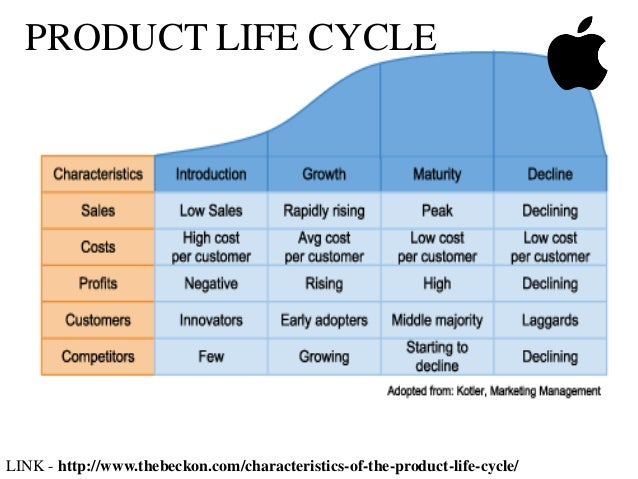
Image result for product life cycleThe second concept that was introduced is the Product Life Cycle, The product life cycle is a timeline that shows the relationship between sales dollars and the age of the product. There are four main stages of the product life cycle: introduction, growth,  maturity, and decline. When discussing this concept, we often referred to the iPhone as it is a product that the entire class is aware of. We concluded that the iPhone brand is continuously moving through the product life cycle because when it reaches maturity, Apple releases another model. The iPhone 4, however, is an example of a specific iPhone that has reached the decline stage. It is impossible to find a new iPhone 4 as they are no longer manufactured.
Image result for iphone product life cycle
Finally, we discussed an interesting aspect of the iPhone--will it ever decline? Some of my classmates share the opinion that the iPhone will never decline because it has become such an essential part of our every day life. The only way the iPhone could decline, in my opinion, is if a product was created that replaced the need for both a laptop and a cellphone. 

Thursday, March 2, 2017

Reflection: Week 7

Tuesday: 

Introduction of New Concepts: 

Tuesday's class discussion opened with an introduction to a new marketing concept known as the "Total Product Concept". The total product concept is a circular diagram that identifies the different components of a product. At the center of the diagram is the core product. The core product is the part of the product that addresses a consumer need. Because we cannot see or touch needs, this aspect of the product is often intangible. Let us use a water bottle as an example. A water bottle's core product is the need consumers have for water in order to survive. The next ring of the diagram refers to the tangible aspect of the product. the tangible aspect of the product is the part that you can see, feel, and touch. To continue with the example of a water bottle, the tangible product is the plastic bottle and the water. It is important to note that the engineers we are working with on our SMART project often focus on the tangible aspect of the product-it is our job to help them realize all three components of a product. Lastly, the outermost section of the total product concept diagram is the augmented product. The augmented product is anything related to the experience a customer gets when using the product. To finish up with the water bottle example, the augmented product would be the guarantee that each water bottle contains the best quality water possible.

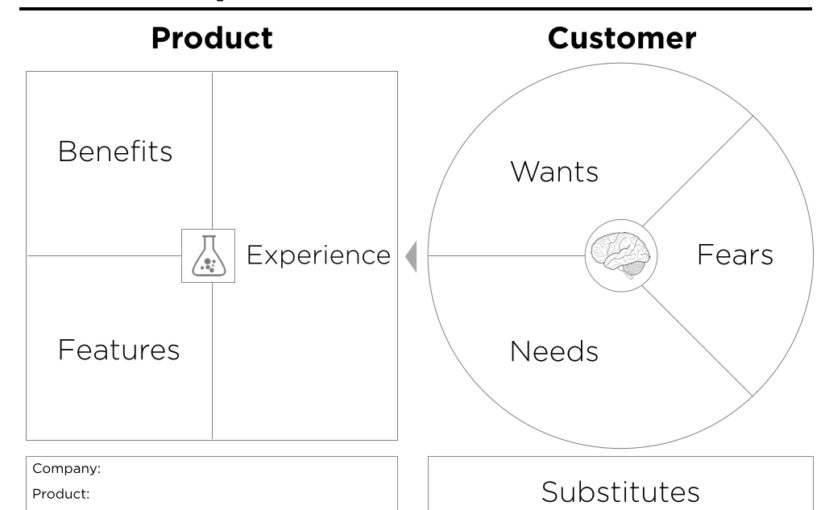
Image result for value proposition canvasAfter discussing the total product concept, we moved into a discussion about another marketing concept known as the "Value Proposition Canvas". The value proposition canvas shows the relationship between the product, customer, and substitutes. The business creating the product must consider the benefits, features, and experiences their product offers. In terms of the customer, they have to think about their needs, wants, and fears. It is difficult, but important, to distinguish between wants and needs. needs tend to be the rational drivers of a decision, whereas wants are the emotional drivers. Finally, the business must consider the substitutes to their product. Ultimately, the business will close the gap between themselves and the customer, while simultaneously widening the gap between the customer and substitutes, by creating value!

Image result for baking sodaThe final concept that was introduced on Tuesday's class is "Positioning Bases". A positioning base is a psychological concept of how the customer views you product in relation to the competition. Products can be positioned based on attributes, the price/quality relationship, use or application, product user, product class, competition, or emotion. One example we talked extensively about in class is the product line Arm & Hammer offers. While they are known for their baking soda, they have positioned themselves on the basis of use and application. Their baking soda can be used for a variety of different things such as cooking, keeping your refrigerator fresh, and even whitening your teeth.

New Shark Tank Episode: Gato Cafe

Image result for gato cafe shark tankAfter learning these new marketing concepts, we watched a Shark Tank clip about a business idea named Gato Cafe. Gato Cafe is the name of a cafe that would be located in southern Florida and would serve beverages and prepackaged foods to guests while they play with cats that roam the cafe. This episode is unlike any episode we have watched this semester because the "product" is a business idea, not a tangible product. Additionally, Gato Cafe is different because it is a service product.

Image result for value pyramidAfter watching the video, we broke into small groups and discussed how the Gato Cafe aligned with the value proposition canvas. After small group discussions, we came together as a class and worked through the value proposition canvas for Gato Cafe. In discussing customer needs, the class identified Gato Cafe a potential alternative health care provider. Gato Cafe can be part of the growing trend of animal therapy. Therapy dogs have become popular, but not everyone likes dogs. So, Gato Cafe could differentiate itself as a cafe that uses "therapy cats".

We also returned to the value pyramid this week and were asked to answer the question: How does Gato Cafe create value? Gato Cafe creates value on a functional basis by appealing to the senses and offering variety. The cafe also creates value on an emotional basis in that its service has the potential to reduce anxiety, act as therapy, and offer fun and entertainment.

Thursday: 

Continuation of Gato Cafe: 

At the beginning of Thursday's class we continued our discussion of Gato Cafe. After briefly reviewing market research that appeared to reveal there is no interest in cats in Southern Florida, we broke into small groups to answer a variety of questions related to concepts from Chapter 10 of the textbook.

Image result for paneraOne of the questions we spent a considerable amount of time discussing is: what type of product is Gato Cafe? Every group said that Gato Cafe was an unsought product because there was little market interest in the concept (at least initially). We, however, were misunderstanding the definition of an unsought product. An unsought product is a product that people want to avoid, like life insurance. That said, Gato Cafe is better defined as a specialty product that distinguishes itself on its attributes.

Another concept we discussed at length is co-branding. Co-branding is the act of putting two or more brands on one product in an effort to promote both brands. We were asked to come up with two co-branding opportunities for Gato Cafe. My group thought of bringing a vendor to Gato Cafe. Panera, which has already established brand equity, would be a great vendor for Gato Cafe because they sell cafe style food in prepackaged forms as well as fresh in store. Another co-branding opportunity my group thought of was for Gato Cafe to partner with a local animal shelter and bring those cats to the cafe for adoption. This would hopefully spark community interest in a cat cafe.

SMART Project: 

At the end of class, we were tasked with completing a value proposition canvas for our SMART project product. Additionally, we were asked to conduct initial market research. Based on that research, we will be coming up with a 10 question survey for potential customers. The idea behind this assignment is to help our group learn who are customers really are!