Thursday, February 23, 2017

Reflection: Week 6

Tuesday: Phone Soap Analysis

Two Business Models: Which category does Phone Soap fall into? Two Sharks have different viewpoints. Mark Cuban thinks that Phone Soap can be a margin business whereas Lori thinks Phone Soap would perform better as a volume business.

Volume Business:

Image result for targetThe volume business model states that a particular product sells in a given market because the market segment has a lot of people who are willing to buy the product, but will not spend a lot of money on it. The business, therefore, makes a low margin on each product, but is able to compensate by selling a large number of products.

Margin Business:

Image result for nordstrom
The margin business model says that a particular product sells in a given market because, even thought the market segment is relatively small, consumers are willing and able to spend a lot of money on the product. Therefore, the business makes a high margin off every product sold.


Limited Decision Making Process:

If Phone Soap were to be sold as a consumer product, it would be categorized as a limited decision making product. I will use the example of a consumer purchasing Phone Soap in Staples, a location the product is current sold at, to demonstrate the consumer buying process:
(1) Need Recognition: The consumer might not recognize their need for the product until they see it on the shelf at the store
Image result for phone soap(2) Information Search: The consumer will read the packaging and learn that their phone is 18 times dirtier than a public toilet. 
(3) Evaluation of Alternatives: Since this is a limited decision making product, the consumer may walk over to the cleaning isle and ask themselves what cleaning products could be used to clean their phone that are less expensive.
(4) Purchase: If the consumer recognizes the value of the product, they will purchase it!
Easy enough, right? Now, lets look at Phone Soap as if it were a business product. 

New Buy:

Image result for hospitalIf Phone Soap were to be sold as a business product, it would be categorized as a new buy because it is new to the market and businesses would be purchasing it for the first time. A "new buy" buying situation is equivalent to an extensive research consumer buying decision. I will use the example of a hospital purchasing Phone Soap to demonstrate the business buying process:
(1) Need Recognition: Someone, perhaps a nurse that works in the waiting room of a particular branch of the hospital, hears about the product and realizes there is a need for it at the hospital. The nurse believes it will help keep the hospital sterile.
(2) Information Search: After passing the need recognition onto her supervisor, the nurse will no longer be involved in the buying process. Rather, someone in administration is now responsible for conducting research and determining whether other wings of the hospital see a need for it too.
(3) Evaluation of Alternatives: The administrative employee will ask conduct further research
(4) Purchase: Most likely, the administrative employee will submit a purchase order to a purchase agent who might have to contact other departments, such as accounting, in order to receive the account number the purchase will be charged to.

Where does my SMART project stand? 

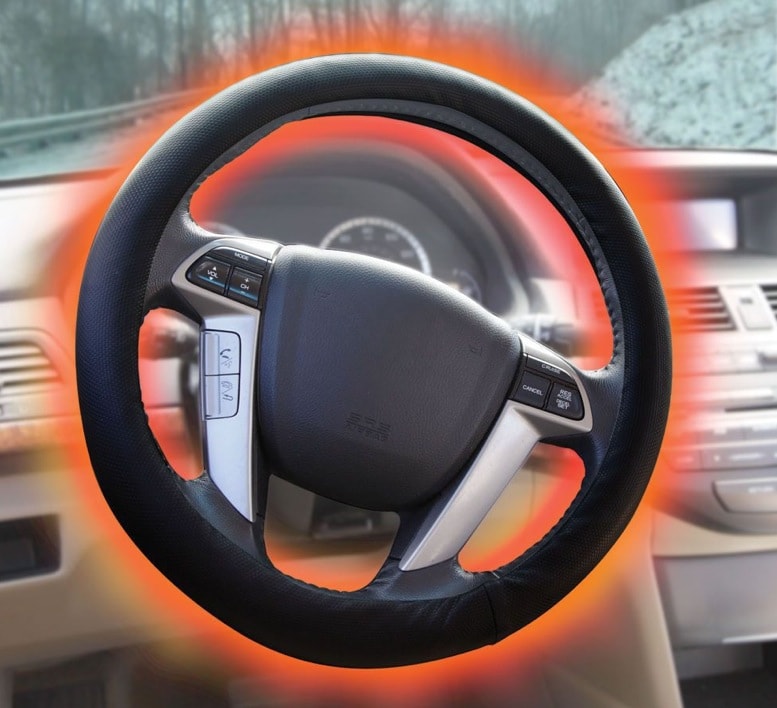
A heated steering wheel will most likely perform in a volume business because there is a large market segment with the need for a heated steering wheel. I also think that the demand for the product would decrease if the price of it was high. Additionally, our heated steering wheel could be classified as a business product. For example, Stop and Shop delivery truck drivers have the same need for a heated steering wheel that regular automobile drivers do too, but I think the better option is to classify the wheel cover as a consumer product. I think it is more likely that a consumer will buy the wheel than a business.

Thursday: 

Market Research: 

Image result for survey
During Thursday's class, we took a look at the surveys we created to conduct market research for the Phone Soap product. It was interesting to see what some groups thought were the most important questions to ask. We learned the importance of the order in which the questions are presented. It is best to start with general questions and get more specific as you go on. If the questions are too specific at the beginning, the people taking your survey might not continue through your other questions.

Additionally, we learned the importance of the word "and" as it pertains to a market research question. Using the word "and" in a questions is the equivalent of asking two questions. When you use "and" you will most likely end up with confusing results since the person taking the survey might respond "yes" or "no" instead of answering both parts of the question.

Finally, we learned that the best way to generate questions is through brainstorming. It is best to write down all possible questions first and then narrow down your list and put them in a specific order.

Value Proposition Canvas: 

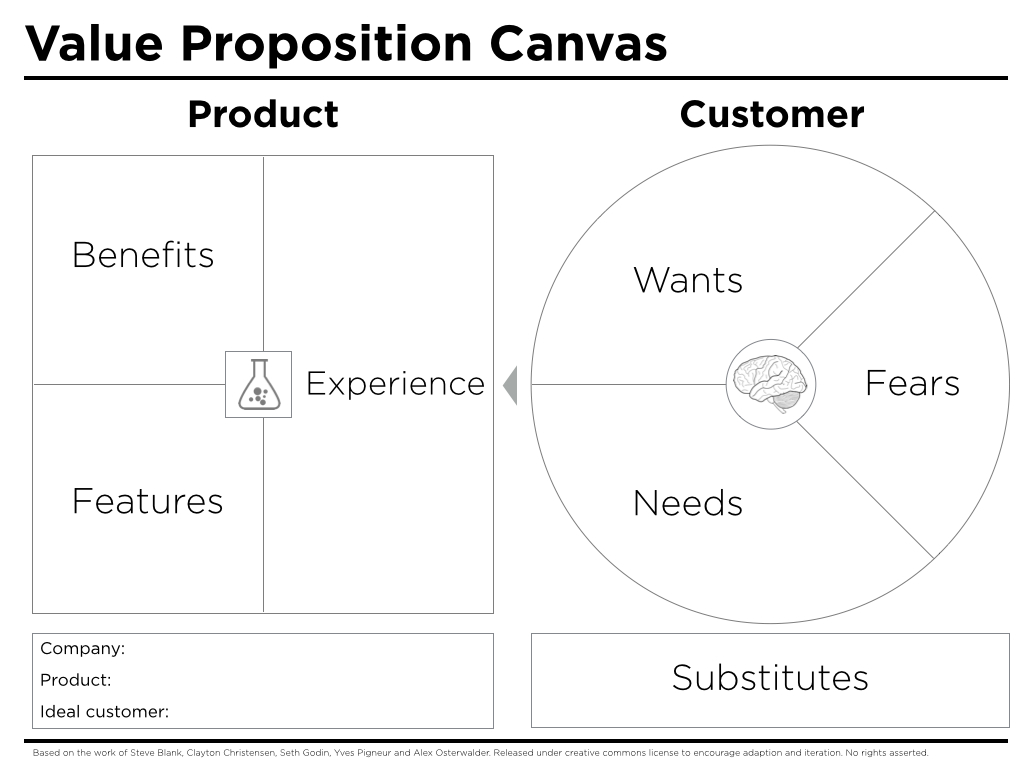
Prior to the start of class, we were asked to watch a video that explained the concept of the value proposition canvas. The value proposition canvas is a tool used to help balance your product with the needs of the customer. It is important to note that the diagram shows a gap between the customer and your product. It is our job, as product developers in the SMART Project and market researchers, to find ways to close the gap between the customers and our product. Likewise, there exists a gap between the customer and the competition. While we are trying to bring our customers closer to our product, we are also trying to distance the customer from the competition. The best way to create space between the customer and our competition is to create value in our product. If we are able to create value,  then we will be able to stimulate habitual buying behavior from our customers--every company's dream.

SMART Project: ThermoWheel 

Our team met with our marketing consultant, Samantha Heffer, this week. The purpose of our meeting was to get her feedback about on our team memo, logo design, and market research. The most important outcome that came from this meeting is that we do not have enough market research. Sam gave us a variety of things to research such as how many new model cars come with heated steering wheels. It is important to look at those statistics because if new cars come with a heated wheel, our market size shrinks. Our team will be meeting over the weekend to conduct research and further refine the team memo. 

Thursday, February 16, 2017

Reflection: Week 5

Tuesday: 

During Tuesday's lecture, we took a closer look at market segmentation.

Related imageSegmentation is marketing's version of stereotyping. Generally, the term "stereotyping" has a negative connotation because it involves judging a group of people based on superficial qualities. Market segmentation, however, is a stereotyping system that has been developed overtime and with the held of extensive research. The six broad categories that market analysts can use to segment a market are:
(1) Demographics
(2) Age
(3) Monetary Income
(4) Stage in Family Life Cycle
(5) Geographics
(6) Psychographic

Psychographic is a new term that was introduced in Chapter 8 of the text and briefly discussed in class:

Psychographic segmentation is segmenting markets on the basis of personality, motives, lifestyles, and geodemographics. It encompasses personality, attitude, motives, and lifestyle.

How can the concept of segmentation be applied to the Affordable Care Act?

Image result for affordable care actThere are two main factors that contribute to segmentation in the application of the Affordable Care Act: (1) participation in the program is dependent on your income level. Most young professionals have low income. (2)  Although most young professionals do not make a lot of money, they are generally the healthiest segment of the population, thus they might be willing to take the risk of living without healthcare. These two factors are only a few of the reasons why the Affordable Care Act did not work as intended. Ultimately, younger Americans were not contributing to the health care system and the elder segment of the population-who needs the most medical attention-was hurting from that.

Segmentation as it applies to your SMART Project: 

In order to make a successful product, you need to consider the benefits the product provides. If you only focus on the components of the product, you will miss out on an entire portion of "the big picture". Our challenge is to meet the needs of our target market, which goes back to a concept learned in Chapter 1- understand your customer!
Image result for phone soap

 Phone Soap Assignment:

At the end of Tuesday's class we were put into groups and asked to watch a Shark Tank video about a product named Phone Soap. Phone Soap is a device that simultaneously charges and cleans your cellphone. The device is universal and will charge any brand of cellphone. Two Sharks saw potential for this product, but each saw the product in a different type of market.

One Shark saw Phone Soap as a business product that could easily be marketed to hospitals, doctor offices, and other healthcare providers. This Shark also thought that Phone Soap could be evolved to fit a tablet and clean the phone in under one minute. Another Shark saw the potential for this product to grow in the consumer market and sell wildly through infomercials and QVC.

Important Concepts from Chapters 7 & 9 that helped me analyze the Phone Soap Video:

Image result for phone soapDemand for a business product can be categorized in four ways:
(1) Derived Demand: the demand for a business product is called derived demand because organizations buy products to be used in producing their customers' products.
(2) Inelastic Demand: inelastic demand means that an increase or decrease in the price of the product will not significantly affect demand for the product.
(3) Joint Demand: joint demand occurs when two or more items are used together in a final product.
(4) Fluctuating Demand: the demand for business products-particularly new plants and equipment- tends to be less stable than the demand for consumer products.

Many different types of business products exist. The following are what category I believe Phone Soap could be classified as:
(1) Accessory Equipment: accessory equipment is generally less expensive and shorter-lived than major equipment. Phone Soap can be considered this type of business product because acquiring it would be an expense to the company and the product would not be associates with depreciation over time.
(2) Supply: Supplies have relatively short lives and are inexpensive compared to other business goods. I feel this group of business products is a great classification for Phone Soap because it is a product that would aid a businesses operations, not one that would directly impact them.

Thursday: 

Related imageThursday's class was a joint class between the business and engineer students. The class was centered around presenting your team's top three product designs and logo ideas and receiving feedback from other groups. I feel that our group received a lot of valuable feedback as to how we can further improve our product:

The most drastic change we will be making to our product is making the temperature settings of the wheel cover both warm and cool. We feel that making this major addition to our project will expand our market and increase the overall attractiveness of the product. We are going to be looking into using a thermodynamic heat source to power the steering wheel.

Our team will be meeting over the weekend to revise the team memo and come up with a final product design.


Thursday, February 9, 2017

Reflection: Week 4

This week's blog post will only incorporate one day of class; however, that one day of class consisted of important discussions about the consumer decision making process. In class on Tuesday, we were given the opportunity to evaluate or blog posts from last week. In doing so, I realized that I incorrectly identified two types of products. I want to begin this week's blog post by correcting my mistake:
Image result for important

Brand Loyal (Habit) Behavior vs. Routine Response Behavior


The main difference between these two terms is the amount of risk the consumer associates with each product. Consumers who display brand loyal buying behavior assume a low risk with the product they are buying because they took an extensive amount of time to determine that is the brand they would like to buy. So, when the consumer initially started buying that product they associated it with a high risk, which is why they conducted extensive research. This is an experience I had with Quaker Oats Oatmeal,  for example. A consumer exercises routine response behavior, however, when they put little time into deciding what brand to buy because they identify the product as having low risk. To name an example, this is how I feel about shaving cream. Every brand gets the job done and I never spend much time deciding which kind to buy because price is the most important factor. Additionally, I do not regularly buy the same brand because I see little difference between all brands.


I would like to dedicate the next section of this blog post to discuss the assignment we were given at the end of Tuesday's class. Before watching a Shark Tank video about a product named "Bambooee", we each picked a market segment out of a hat. Our assignment was to create a print advertisement that met the needs and interests of out market segment. The market segment I worked with is:

Kid Country, USA

Image result for family on vacation cartoonDespite what the name implies, this market segment consists of people who are most likely age 25-44, live in towns, have earned a college education, are of midscale income, and have kids. These families most likely enjoy outdoor activities and own a boat or an ATV, according to the website CLARATIS.

When conducting research for this assignment, I identified people ages 25-44 as part of "Generation X". Our textbook claims that people of Generation X are the best educated generation with 29% of them earning a bachelor's degree or better. Gen Xs tend to be disloyal to brands and skeptical of bug business. Furthermore, they desire an experience, not just a product. Perhaps this is why they are likely to own a boar or an ATV. Lastly, this market segment is not found near Western New England University, nor is it found in my home town of Belchertown, Massachusetts.


In my print advertisement, I decided to emphasize that Bambooee is more than a product and that it provides a unique cleaning experience. I included, but did not focus on, how eco-friendly the product was because I figured that my consumer would be educated enough to know that a machine wash and dry product would be more environmentally friendly than regular paper towels. I included a caption that read "ditch your name brand for Bambooee" because Kid Country consumers are disloyal to brands.


I want to reserve the last section of my blog to discuss the work team Hot Wheelz has completed on the "Smart Project" this week:

Heated Steering Wheel: Update

Image result for steering wheel on fireThis week I learned what a product screening matrix is, and I am fascinated by the concept. Normally, when a business student thinks about the best possible version of a product, the first thing that comes to mind is aesthetics. A product screening matrix teaches you that the product that has the overall best functionality will prevail over products that only consider aesthetics. Perhaps this is an easy concept that I should have considered before this week, but learning about a product screening matrix made me think about the heated steering wheel in a different way than ever before.

Second, our team began revisions of the team memo that we turned in last week. From the comments left on the memo, it is obvious that we missed what social trends make this "bug" relevant. Along with trends, we are including several new criteria and restraints based on the feedback from our classmates last week. For example, a very obvious constraint that we missed the first time is the limited availability of every group member.


Thursday, February 2, 2017

Reflection: Week 3

Continuum of Consumer Buying Decisions: 

Image result for quaker oats high fiber cinnamon swirlThese are some products I buy! Each product falls into a cell of the consumer decision making process chart discussed in Chapter 6 of the text.

Routine Response Behavior: Quaker Oats High Fiber Oatmeal

A good that is purchased through routine response behavior require little time on search and decision making because consumers often buy the brand every time. These types of goods (or services) are also known as low-involvement products. For example, I purchase Quaker Oats High Fiber Oatmeal without thinking twice about considering another brand. Quaker Oats was the first brand of oatmeal I tried and, because I am satisfied with the product, I do not feel the need to test other brands.

Related imageHabitual Buying Behavior: Shaving Cream

Habitual Buying Behavior is a practice by which a consumer sees very little difference between different brands of the same product. This is my attitude towards shaving cream! I do not see the difference in brands of shaving cream because each brand accomplishes the same thing and has little impact on my hygiene routine.

Limited Decision Making: Shampoo

Image result for tresemme shampoo curly hairI try to regularly purchase Tresemme shampoo/conditioner for curly hair. Sometimes, however, when I go to the grocery store or drug store, Tresemme shampoo for curly hair is not available or its too expensive for what I am willing to spend. In this situation, I revert to another brand that has shampoo for curly hair. This is an example of a limited decision making process because I expend only moderate effort in searching for information or in considering various alternatives.


Extensive Decision Making: Kindle Paperwhite

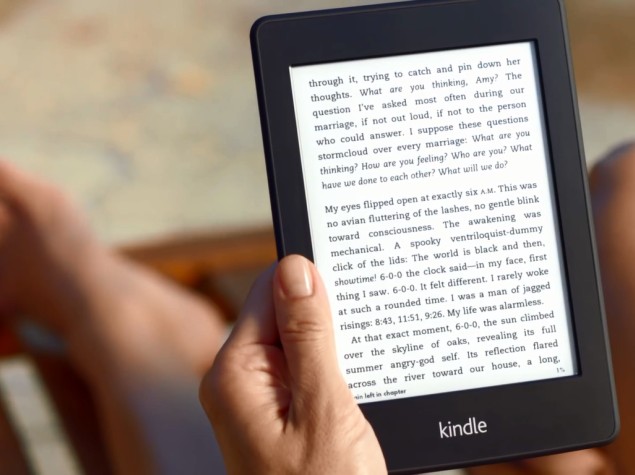
Related imageConsumers exercise extensive decision making when buying an unfamiliar or expensive product or an infrequently bought item. this type of decision making is associated with high involvement because consumers want to make the right decision. Over the summer I had an extensive decision making buying experience when I purchased a Kindle Paperwhite. I researched which type of kindle would meet my needs and looked at several reviews. I also looked at the Kindle's competitors and their prices and functions before deciding to purchase the product.

Image result for grocery store check out line Other Interesting Topics from Chapter 6: 

Planned Versus Impulse Purchase

I found reading about the difference between a planned and impulse purchase to be very interesting. I think I found this section of the text so interesting because it is something I do often. For example, I regularly make partially planned purchases where I know what I want to buy, but I do not know what brand I want to buy until I get to the store. I found it intriguing that 75% of adults in the United States have make an impulse purchase. 


Showrooming

Many consumers enjoy examining merchandise in a physical location without purchasing it, and the shopping online for a better deal on the same item. I find this consumer buying behavior to be really interesting because I think it shows how far society's values are changing. Not long ago, people preferred shopping in stores. Online shopping has created a totally new market!

Team HOT WHEELZ: Heated Steering Wheel

Team Memo

At the beginning of this week, my team completed our team memo. The team memo included our Point of View "Mad Lib" which was presented in class on Thursday. The team also began brainstorming ideas for what we want out product to look like.

Product Design

After our meeting at the beginning of the week, my team and I broke off into smaller teams in order to brainstorm ideas for what the wheel cover would look like.After convening in Thursday's class we decided that it would be best for each of us to come up with one complete design for the wheel cover. In the next two weeks we plan to have two meetings. One meeting to pool our ideas together and produce three good product designs and another meeting to revise the team memos that were handed back in class on Thursday.